Let's revise the vocabulary of Unit 6!

The following factors affects food and nutrition.
· Basal metabolic rate
· Weight
· Age
· Sex
· Climate and environment
· Physical activities
· Physiological state
· Socio economic factors
· Cultural factors
o Life style and food habits
o Food fads
o Cooking practices
o Child rearing practices
· Religion
· Traditional factors
· Food production and distribution.

· Good nutrition is essential for attainment of normal growth
and development during fetal life and childhood.
Physical growth, intellectual development, learning and
behaviour are affected by malnutrition.
· Adequate nutrition is needed for adult life maintenance for
optimum health and efficiency.
· Elder people needs special nutrition due to their
physiological and chronological changes.
· Pregnant and lactating mothers require more proteins
and nutrients to prevent abortion, growth retardation
and low birth weight babies and provide adequate
breast feeding for their babies.
· Good nutrition is essential to prevent nutritional
deficiency diseases, promotion of health and treatment
of deficiency diseases: protein energy malnutrition, blindness, goiter,
anemia, beriberi, rickets etc. There is increased incidence
of abortion, prematurity, still birth and low birth
weight babies in malnourished mothers.
· A well balanced nutrition prevents infections like
tuberculosis. Good nutrition enhances wound healing.
Improves resistance of an individual towards infections.
· Malnutrition leads to increased death rate, infant
mortality rate, stillbirths and premature deliveries. Prematurity
is the major cause of deaths.
· Over nutrition causes diseases like obesity, diabetes,
hypertension, cardiovascular and renal diseases and causes death.

CAN
Ability, doubt, astonishment, permission, polite, request.
MUST
Obligation, firm necessity, logical, conclusion, probability.
HAVE TO
Unwillingness, forced circumtances.
“CAN”
“CAN” is one of the most used modal verbs in English. “Can” is an auxiliary verb (modal auxiliary verb).
It can be used to express;

General Structure of “CAN” in a Sentence
POSITIVE FORM (+) : Subject + CAN + Verb (first form of the verb).
NEGATIVE FORM (-) : Subject + CAN + NOT ( CAN’T ) + Verb (first form of the verb).
QUESTION FORM (?) : CAN+ Subject + Verb (first form of the verb).
Examples:
Contraction for ” CAN NOT “;
can not –> can’t Ex: I can’t swim.
Using ” CAN “
1. It is used to express that someone is able to do something. (Present Ability)
Examples:
2. It is used to express that something is possible. (General Possibility)
Examples:
3. It is used in a question, which is not a real question, to ask somebody to do something. We want somebody to do our request (in an informal way, especially between friends or family ). (Informal Request)
Examples:
4. It is also used to ask or give permission for something. (Informal Permission)
Examples:
5. It is used in offers to help someone or to do something for someone. (Informal Offer)
Examples:
Attention:
For ” CAN NOT”;
1. It is used in negative saying (when we are sure that something is not true or something is surprising).
Examples:
2. It is also used in negative saying (when something is forbidden or not allowed).
Examples:
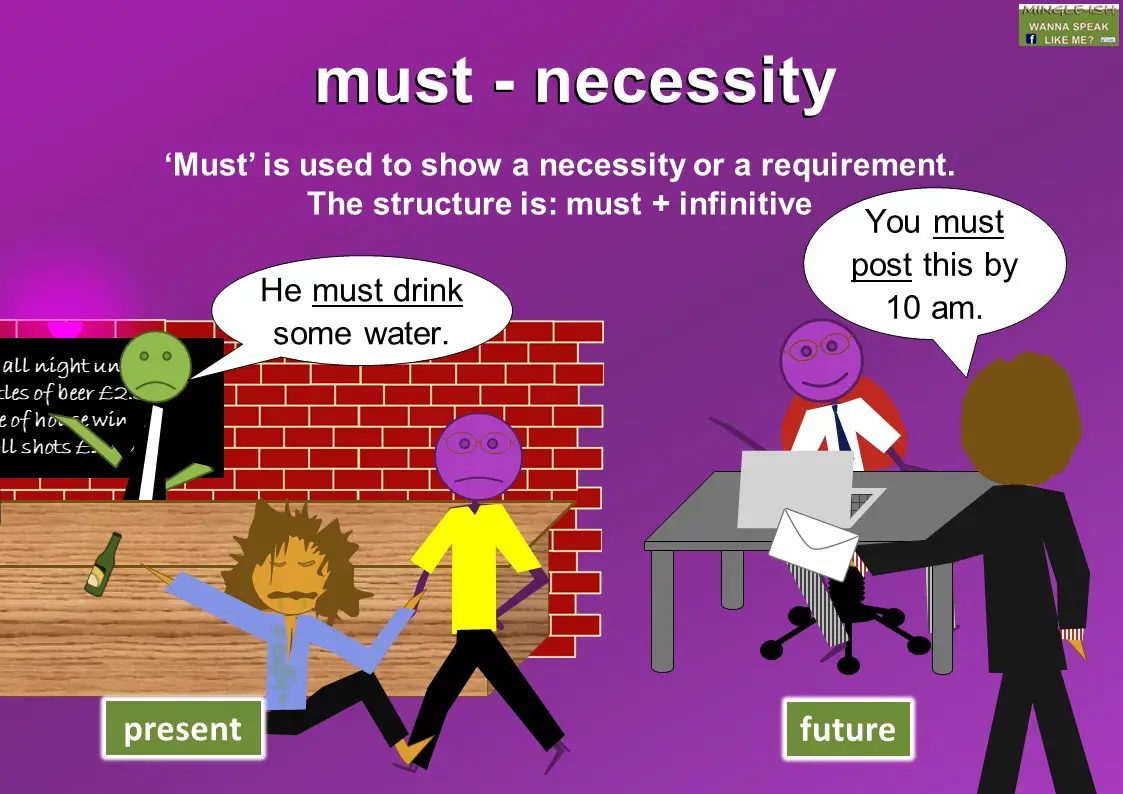
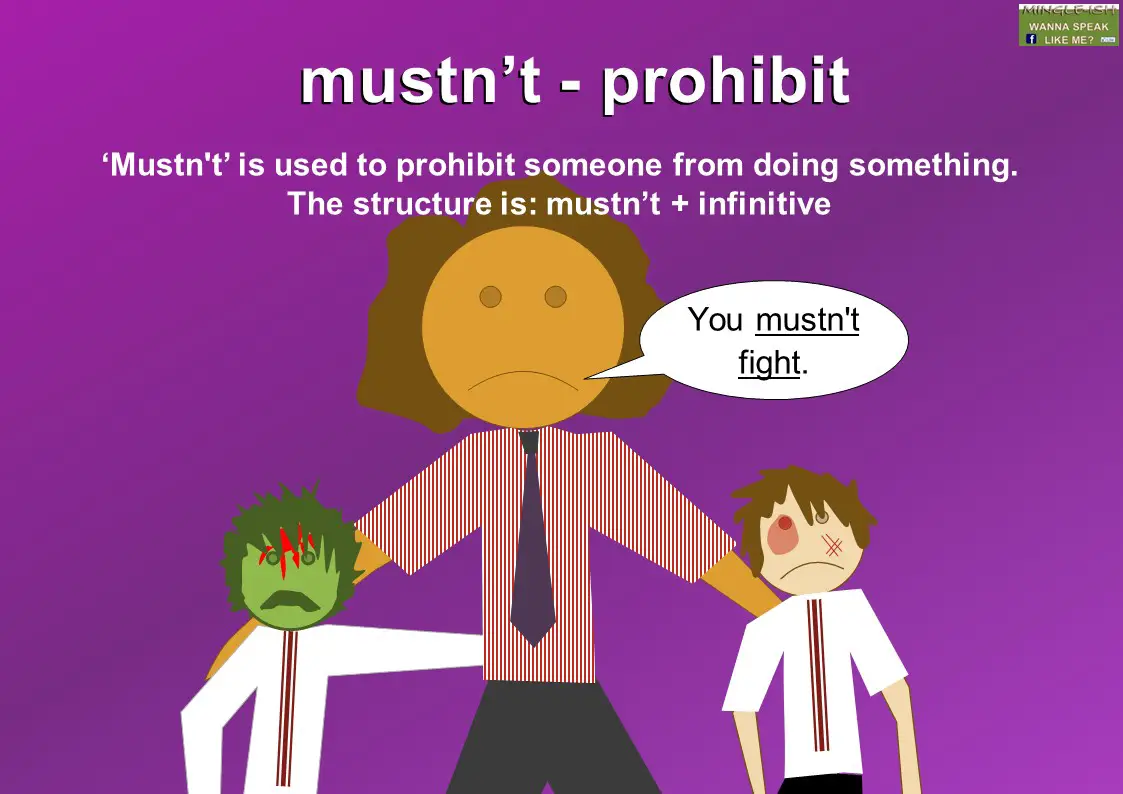
"Must"
Here are the ways in which we use ‘must’ as a modal.
Take a look at the pictures below, you’ll find the function of ‘must’ as a modal and examples in everyday use.

You have been studying the whole morning. You must be tired.
Cannot (can’t)
I saw him on the city center ten minutes ago so he cannot be home yet.


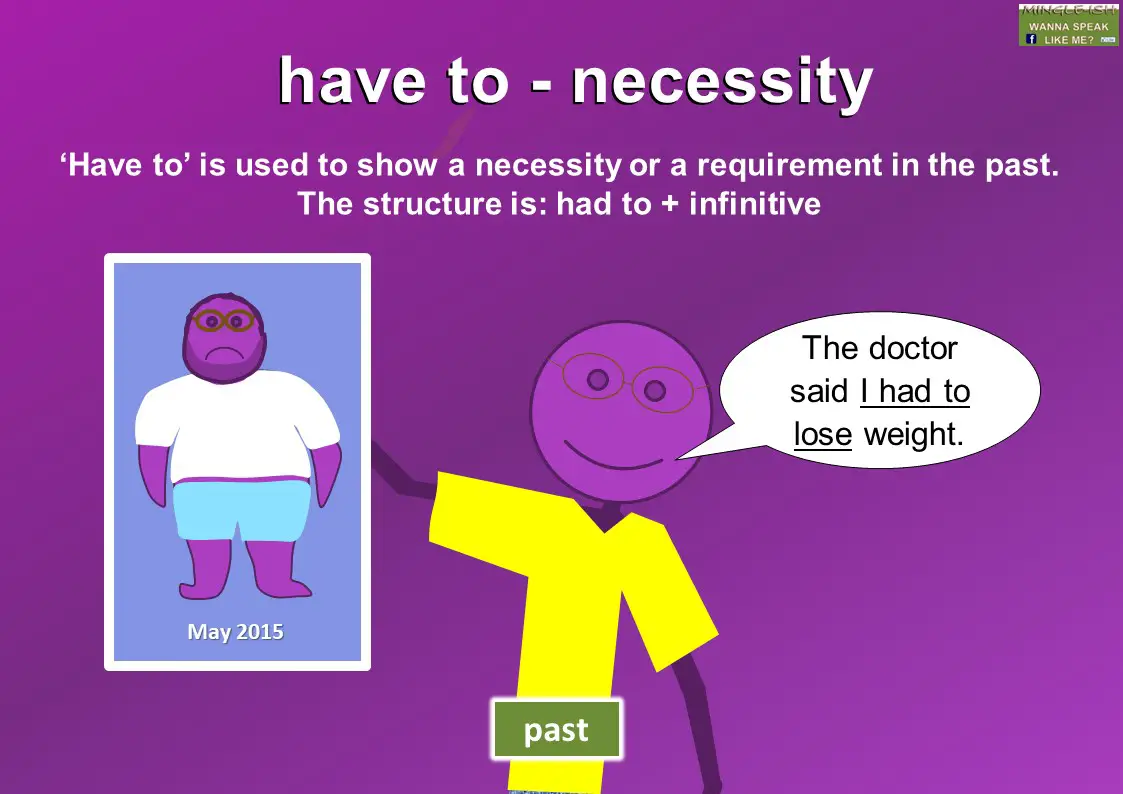
Here are the ways in which we use ‘have to’ as a modal.
Take a look at the pictures below, you’ll find the function of ‘have to’ as a modal and examples in everyday use.